Flash Sale 70% Off
Give customers details about the banner image(s) or content on the template.
Eczema Root Causes

Oral health and eczema are far more connected than most parents ever get told. And if you have a kid with sensitive skin, sensitive digestion, sensitive everything… you already know that the smallest things can make a surprisingly big impact.
So when your child fights brushing, gags at the taste of toothpaste, or ends up with bleeding gums even though you’re doing your absolute best, you’re not imagining it. Their mouth is a mirror of what’s happening inside their body. And when the oral microbiome isn’t balanced, it can add fuel to the inflammation fire that eczema already loves to burn.
The good news? You don’t need special gadgets, toxic toothpaste, or a dental degree to support your child’s mouth in a way that actually calms their system instead of stressing it out. In fact, their oral care routine can be simple, gentle, and incredibly effective.
Let’s walk through what’s really going on in your child’s mouth, how it affects their skin, and what you should actually be using to brush a sensitive kid’s teeth.
The phrase “oral health and eczema” should be far more common than it is. The mouth is the forgotten entry point into the gut—and therefore into your child’s immune system.
When the oral microbiome is off, you may see things like:
These aren’t “just dental issues.” They’re red flags for systemic inflammation—one of eczema’s biggest triggers.
The gums are thin and highly vascular. When harmful bacteria overgrow, it doesn’t stay local. It can get swallowed, pass through the stomach, or even travel through the bloodstream and end up influencing:
When you support the mouth gently and naturally, you give your child’s skin (and their whole system) one more reason to calm down.
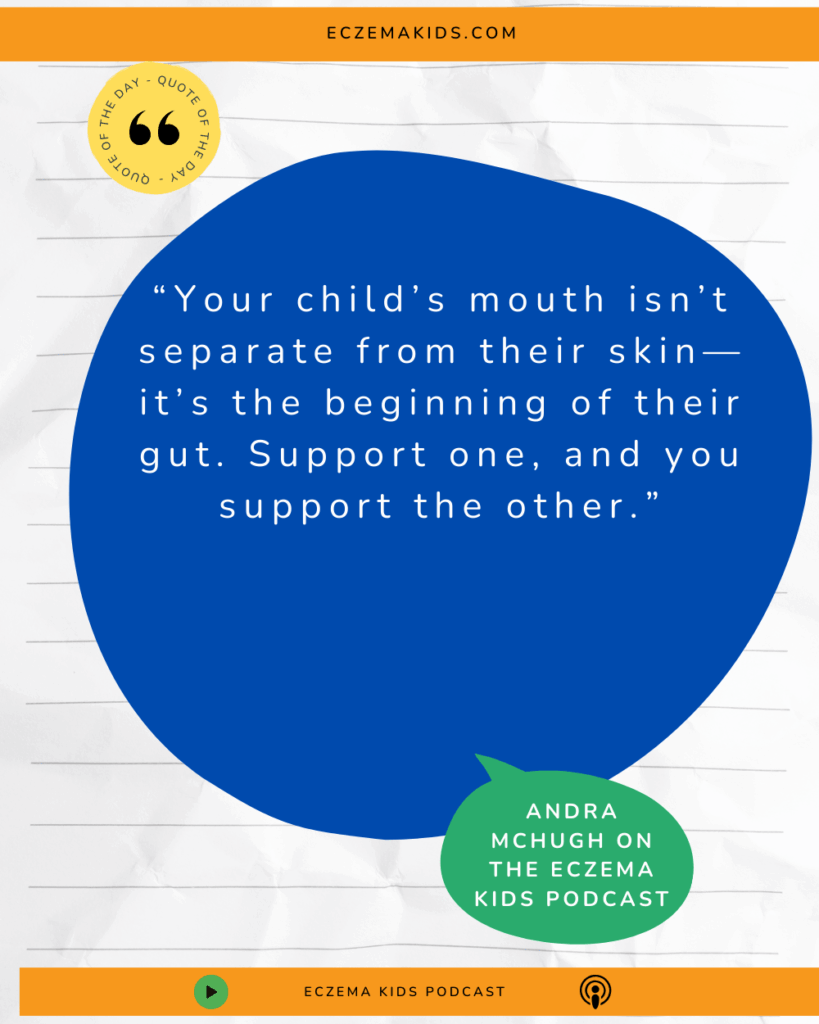
“Your child’s mouth isn’t separate from their skin, t’s the beginning of their gut. Support one, and you support the other.”
-Andra McHugh
Sensitive kids often show early warning signs long before cavities show up.
Bleeding is never normal. Not “a little normal.” Not “they were brushing too hard.”
It means inflammation, period.
Persistent halitosis isn’t “kid breath.” It’s a microbiome waving a giant flag.
This usually reflects irritated gums or a disrupted oral ecosystem.
Sugary food isn’t the only culprit. Dysbiosis matters just as much.
If your child already has eczema, this cluster of symptoms deserves attention—not panic, just awareness.
One of the biggest bacterial troublemakers is Fusobacterium nucleatum. It’s meant to be a harmless commensal bacteria (think: a houseguest who should stay for a weekend but not six months).
When it overgrows, it can:
And if you’ve ever seen your child flare after illness, stress, antibiotics, or teething? That’s inflammation taking the wheel.
Taking care of the mouth supports the gut, which supports the skin. It’s all one system.crucial for detoxifying and healing the skin.
Let’s keep this simple. Sensitive kids do best with gentleness, low-tox ingredients, and very practical tools.
Kids with eczema tend to have sensitive nervous systems and sensitive mucosa.
Keep it simple:
If brushing currently feels like a wrestling match, sometimes switching the brush alone makes a huge difference.
You don’t need the foaming, burning, artificially flavored pastes. You also don’t need fluoride treatments if you’re already living a whole-food, low-sugar life.
Great options:
What to avoid:
And don’t stress about vegetable glycerin if it shows up on the label. Perfect is not the goal—consistency is.
This is the sleeper tool that works shockingly well for sensitive kids.
Why?
Because brushing alone doesn’t break down biofilms, but gently scrubbing between the teeth does. And black seed oil is incredibly calming for the oral microbiome.
How to use it:
Benefits:
You don’t have to do this every night. Even a few times a week can change the game.
You don’t have to outlaw treats forever.
Just stack habits in your favor:
This keeps bacteria from camping on the teeth and creating inflammation.
Here’s what an ideal-but-doable daily routine looks like:
That’s it.
Simple. Gentle. Non-inflammatory.
Because this routine doesn’t fight the body—it supports it. And when your child’s system is already overwhelmed by eczema, allergies, gut issues, poor sleep, or sensory challenges, the last thing they need is more irritation.
Supporting the oral microbiome means:
Small hinges swing big doors.
Can we ever get enough? For more holistic eczema skincare secrets check out, This Amazing Eczema-Ease Prebiotic Tea. Also check out these useful related articles, Eczema Allergy Testing Eczema Triggers in Skincare and Why does Eczema get worst in Winter.


What toothpaste is safest for sensitive kids with eczema?
A fluoride-free, low-tox paste without SLS is ideal. Himalayan brand and hydroxyapatite-based pastes are great options because they’re gentle, non-irritating, and support enamel without inflaming sensitive systems.
Does bad breath mean my child’s gut is unhealthy?
Often, yes. Persistent halitosis can indicate oral dysbiosis, tonsil issues, airway problems, or underlying gut imbalance. Because the gut–skin–mouth connection is strong, bad breath is worth paying attention to (without panicking). Supporting the oral microbiome can help calm eczema from an unexpected angle.


Helping kids find calmer skin and helping parents find a clearer path forward.
Helping kids find calmer skin and helping parents find a clearer path forward.